

The Oldest Physical Evidence of Kotagede's Silver Craftsmanship

As written in the article on this page, which questions the concrete proof of Kotagede silver works traditionally said to have started in the 16th century but lacking physical relics from that era, the next question arises: Is there any physical evidence of the oldest silver craft pieces made by Kotagede artisans?
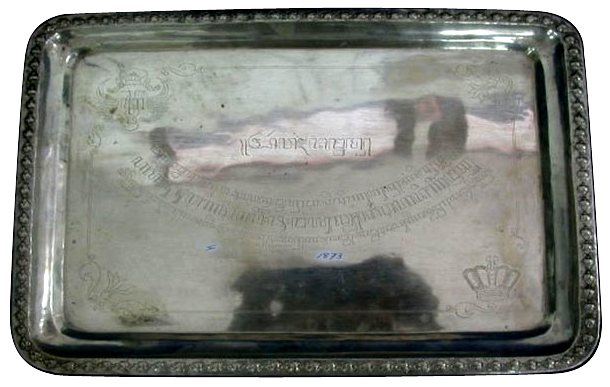
As far as the author has observed, there are several antique silver works by Kotagede craftsmen produced during the era of Sri Sultan Hamengkubuwono VI. The first evidence is a silver tray created for Sri Sultan Hamengkubuwono VI on the occasion of his birthday in 1875.
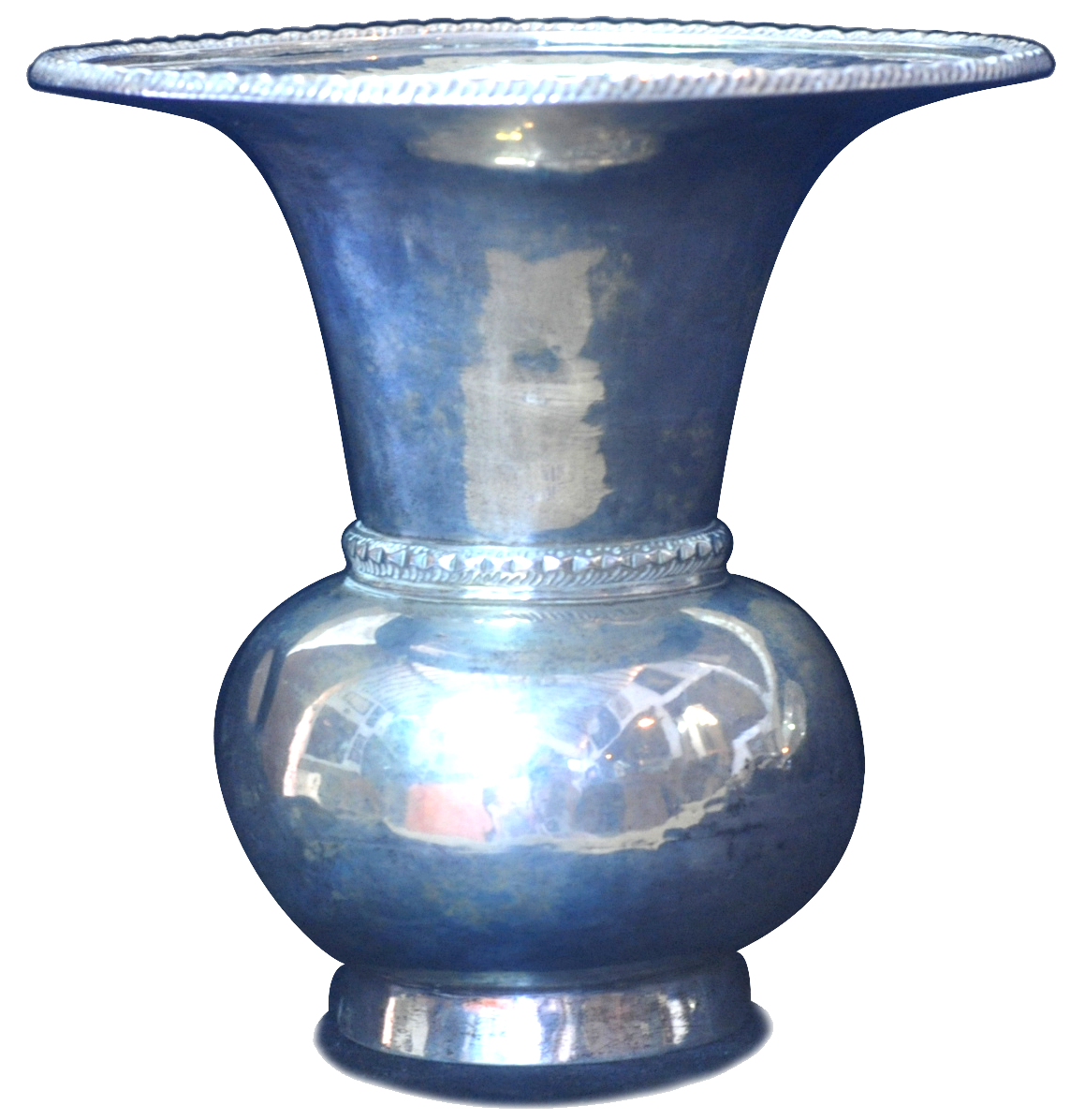
The second evidence is a silver spittoon (kecohan) with an upper diameter of 16 cm, height of 17 cm, and weight of 430 grams. A kecohan is a vessel used by kings or queens to collect residue during betel-chewing (menginang) rituals. While this kecohan lacks definitive markings proving it was crafted during Sri Sultan Hamengkubuwono VII's era, it bears a striking resemblance to objects placed on tables next to the throne in historical photographs of Sri Sultan Hamengkubuwono VII. Additionally, this kecohan was found alongside a third piece of evidence that has a verified record.
The third evidence consists of a pair of silver utensils: a square stand resembling a small tray measuring 24.5 cm x 24.5 cm weighing 435 grams, and a silver bowl with a diameter of 18 cm, height of 9 cm, and weight of 393 grams.
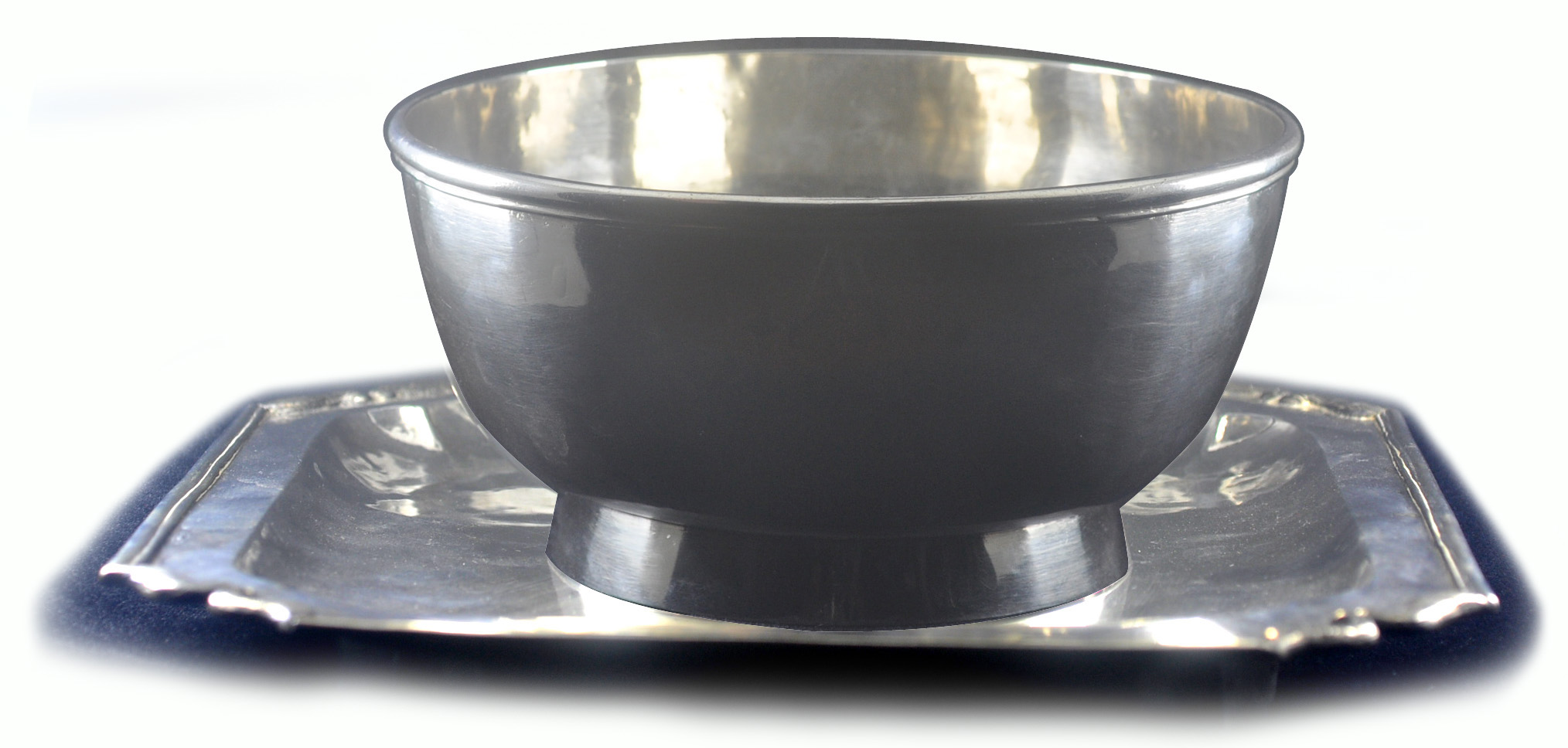
Beneath this square stand or tray is an inscription in Javanese script:
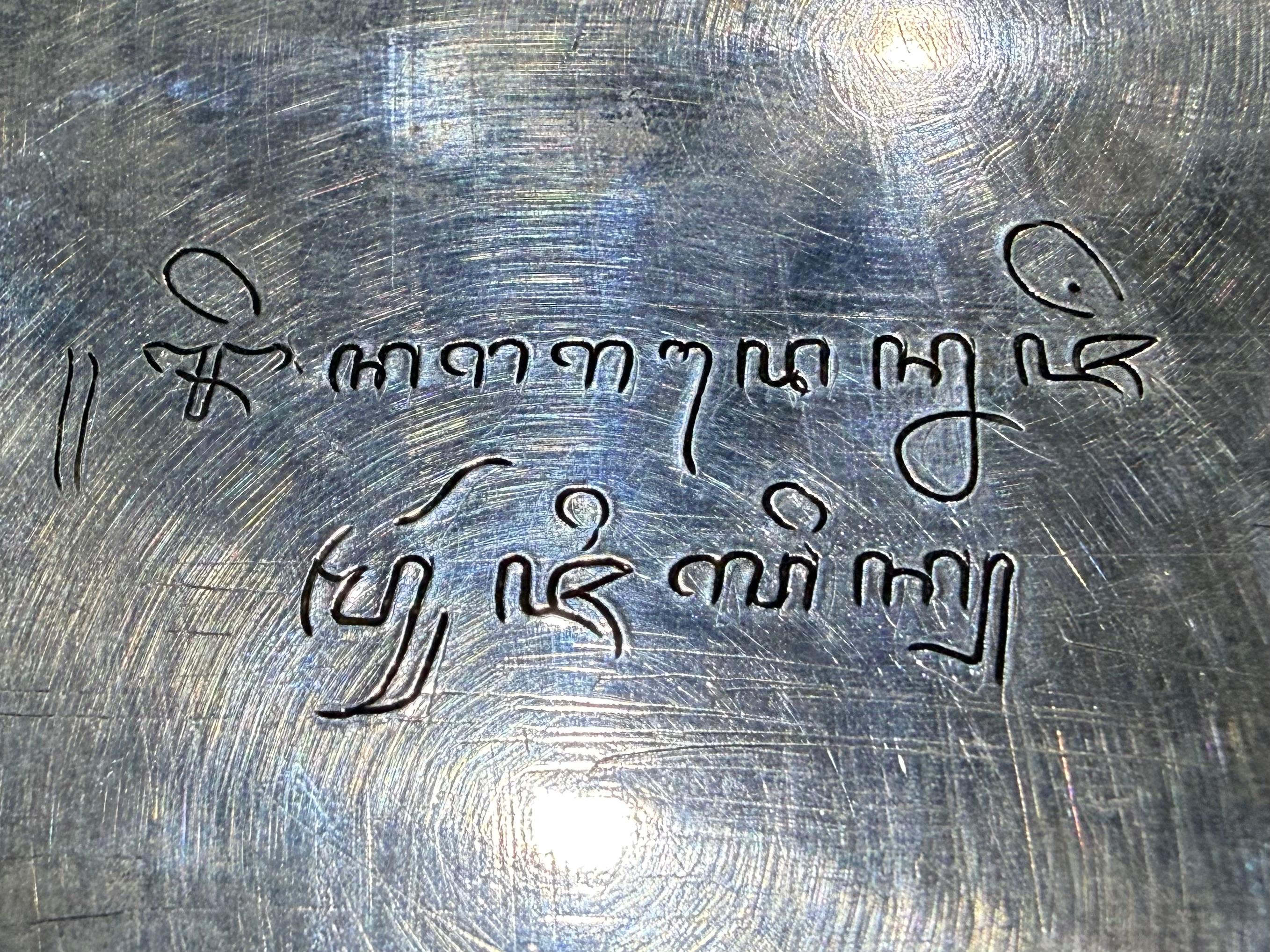
Transliterated into Latin script, the inscription reads: Bandara Raden Ajeng Murjilin. Who was Bandara Raden Ajeng Murjilin? If we trace historical records, Bendara Raden Ayu Murjilin was the daughter of Sultan Hamengkubuwono VII from one of his royal concubines, Bendara Raden Ayu Pujaretna.
Since these three silver objects were acquired from the same source, it can be concluded that they were likely crafted during the same period—specifically, during the reign of Sultan Hamengkubuwono VII (1877 to 1921), the longest reign of any sultan in the Yogyakarta palace. This era is historically celebrated as a period of prosperity and modernization in Yogyakarta.
During this period, the Sultanate of Yogyakarta reached a peak of economic prosperity with the construction of 17 sugar mills, a railway network, the establishment of modern schools, and more. The Sultan was widely known as "Sultan Sugih" (the Wealthy Sultan) due to the immense profits from the sugar mills, which were used to renovate the palace and improve public infrastructure, driving Yogyakarta toward modernization.
Sultan Hamengkubuwono VII's reign represented a transition toward modernity, replacing the forced cultivation system (cultuurstelsel) with a liberal economic system. The Sultan's progressive views also extended to education, leading him to send many of his sons to study in the Netherlands. This forward-thinking approach advanced Yogyakarta culturally and economically, culminating in projects like the 1889 renovation of the Tugu Golong Gilig and the construction of Pesanggrahan Ambarukmo.
In the realm of arts and culture, this era birthed the Bedaya Sumreg, Srimpi Dhendhang Sumbawa, and Bedaya Lala dances, along with the creation of highly-regarded krises. Thus, it is highly rational that Kotagede's silver craftsmanship flourished during the reign of Sultan Hamengkubuwono VII, and physical proofs of these masterpieces can still be found today, although they have become increasingly rare in recent times.