


If we refer to my writing in this article and connect it with the opinion of an entrepreneur the author met in 2005—who stated that in the 1900s there were only about 4 Kotagede silver companies serving orders from the Yogyakarta Palace family—we can conclude that before the 19th century, Kotagede silver entrepreneurs primarily served the royal court.
According to research by Van Mook, a Dutchman who served as an agrarian affairs advisor to the Sultan of Yogyakarta from 1921 to 1925, in 1922 it was actually the batik business that held the first place in bringing prosperity to the Kotagede community. In 1922, the town had 211 wholesalers and master craftsmen, eleven percent of whom traded in textiles, batik, and related goods. Nine percent were employed as silversmiths, mostly making jewelry. Van Mook stated that during the first twenty years of the 20th century, batik production and trade were the most important sources of income for the residents of Kotagede. Indeed, these decades were known as the 'batik era.' From Kotagede, batik traders spread throughout Java.
In the 1930s, the batik craft in Kotagede was once again eclipsed by silver craftsmanship. In his thesis on the Muhammadiyah Islamic movement in Kotagede, written in 1983, Mitsuo Nakamura described how many older residents of Kotagede recalled the period between the late 1920s and late 1930s as the 'silver age.' The silver craft flourished due to the convergence of several factors: the availability of capital, entrepreneurs, technological innovation, and new markets. Nakamura attributed the first two factors to the growth of the batik industry in previous years. The success of batik had created a new class of merchants who reinvested their capital and knowledge into other economic activities, including the silver trade. The silver period truly began when the Dutch started showing a serious interest in traditional Kotagede silver.
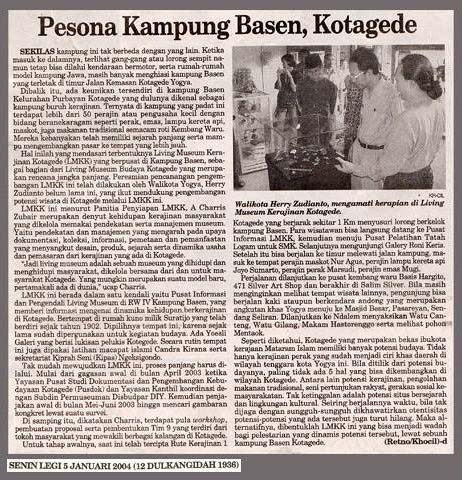
If we trace the development of Kotagede's silver business, it can be concluded that Kotagede's silver craft industry experienced its golden age from 1930 to 1942. In 2003, the author, who was then the Chairman of the Kotagede Craft Living Museum (LMK), along with several board members, conducted a small-scale research study interviewing elderly silversmiths who had lived through the Dutch colonial era. The LMK Kotagede was established on the initiative of several local cultural advocates, funded by the Yogyakarta City government, and inaugurated by Mayor Hery Zudianto.
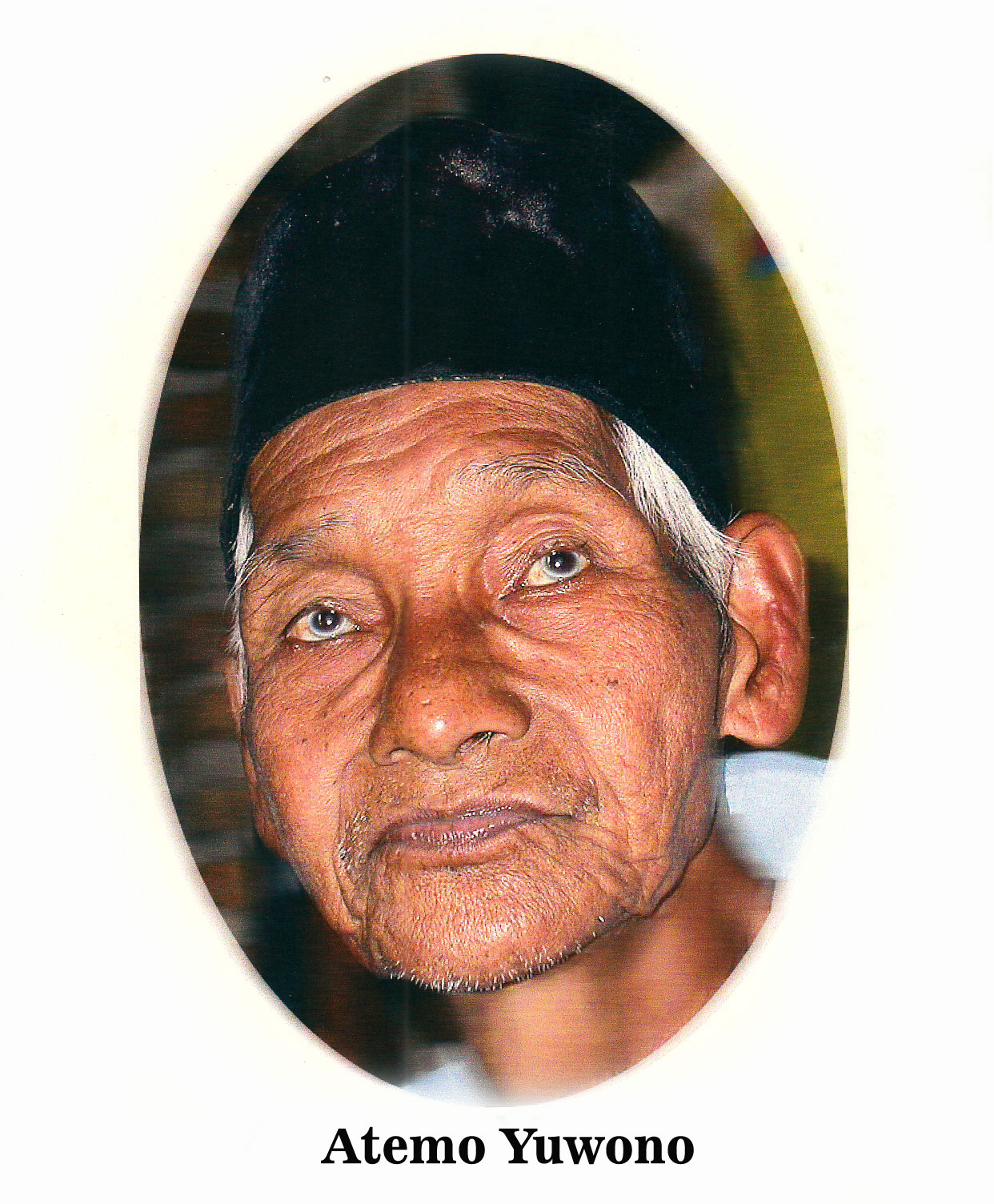
From interviews with the elderly silversmiths we met in 2004, including the late Mr. Atmo Yuwono, we learned that during the Dutch era, a Kotagede silversmith could earn an income of Rp 2.5 per day. When we asked the silversmith how many kilograms of rice Rp 2.5 could buy at that time, he answered that it could buy 30 kg of rice. If we convert that to today's value, where 1 kg of rice is approximately Rp 15,000, a Kotagede silversmith's daily income at that time would be equivalent to Rp 15,000 x 30 = Rp 450,000. This is an exceptionally high value, illustrating a very decent standard of living for silversmiths back then.
In fact, there was a common saying in Kotagede at that time that a silversmith (silver engraver) was the ultimate dream profession in the eyes of local parents-in-law. This is an important socio-economic note that should make all of us living in the modern era realize and analyze why the art of Kotagede silver craftsmanship experienced its golden age between 1930 and 1942.
Why did the artistic quality of Kotagede silver craftsmanship decline?
In the author's observation, the artistic quality of Kotagede silver declined because the appreciation for Kotagede's craftsmanship declined. In the past, a Kotagede silver piece was sold as a unique work of art. As the market expanded, many traders entered, and unhealthy price competition among silver merchants led them to slash prices. Most saddeningly, in the author's view, was when the selling value of a Kotagede silver work began to be calculated purely based on its weight—where silver craft was sold based on the weight of the silver used, and the production/craftsmanship labor cost was not fairly valued. It was at that point that the artistic value of Kotagede silver slowly began to decline.
References:
Pienke W.H. Kal, Yogya Silver, KIT Publisher Tropen Museum, 2005