
Catur Gatra Tunggal: The Royal Palace (Keraton)

The Palace (Keraton)
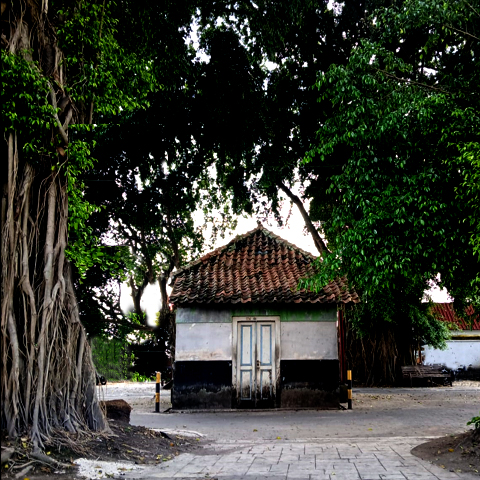
The Palace element of the 16th-century reign of Panembahan Senopati has now, after 400 years, turned into a residential settlement. In terms of toponymy, this area is named Kampung Dalem, referring to the inner quarters of Panembahan Senopati's palace. The historical sites that can still be observed in Kampung Dalem include Batu Gilang, Batu Gatheng, and Batu Genthong. Currently, these three cultural heritage objects are stored inside a small building; if you wish to enter, you can contact the abdi dalem caretaker who lives to the east of the building holding these artifacts.
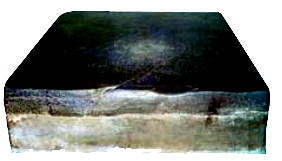
First, Batu Gilang is a square-shaped black andesite stone measuring 200cm x 200cm, with a height of about 20cm, set on a 30cm base foundation. It is called Watu Gilang because its surface is smooth and glossy. This stone is believed to have served as Panembahan Senopati's throne. On the eastern side of Batu Gilang, there is a dent that, according to local legend, was formed when Ki Ageng Mangir's head was struck against it as he bowed to show respect to Panembahan Senopati. If it is true that Batu Gilang was the site of Panembahan Senopati's throne, it can be said that this spot was the absolute administrative center of the Mataram Kingdom during his reign.
Chronologically, the Mangir region was a tax-exempt land (tanah perdikan) belonging to the former Majapahit Empire that had developed long before the Mataram Kingdom was established in the Mentaok forest. If Mataram had launched a direct military assault on Mangir, they likely would have lost due to the strength of Mangir's warriors. Therefore, a strategy was devised to defeat Ki Ageng Mangir through peaceful, subtle means. On the advice of Ki Juru Mertani, Panembahan Senopati sent his daughter, Roro Pembayun, disguised as a ledek dancer to travel and perform in the Mangir area. Intrigued by her performance, Ki Ageng Mangir fell in love and married her. Once Pembayun became pregnant, she confessed her true identity to Ki Ageng Mangir.
With the spirit of a true knight, Ki Ageng Mangir accompanied Roro Pembayun back to Mataram to pay respects to his father-in-law. It was during this meeting, as he bowed in reverence, that Panembahan Senopati struck Ki Ageng Mangir's head against the Batu Gilang throne. A tragic historical tale of a son-in-law killed for the expansion of Mataram's rule. May such tragic power struggles sacrificing family members remain a relic of the past and never be repeated anywhere else on earth.
Second is the three Batu Gatheng—Gatheng is a traditional game played by throwing round objects. According to local myth, these three stones were used by Raden Rangga, the son of Panembahan Senopati, who possessed extraordinary supernatural powers from a young age. On one of the yellowish stones, there are several holes interpreted as indentations left by Raden Rangga's fingers pressing into the stone. In reality, according to historians like Prof. Dr. Inajati Adrisijanti, a Professor of Archaeology and an expert in Islamic history of the archipelago from Gadjah Mada University, these three stones are actually cannonballs used during the reign of Sultan Agung.
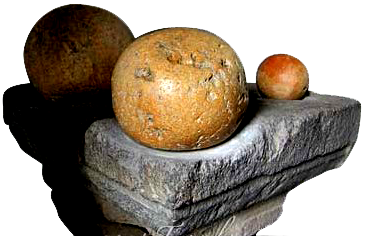
If observed closely, the square andesite stone supporting the Batu Gatheng is actually a yoni stone, which likely dates back to the Hindu Mataram period.
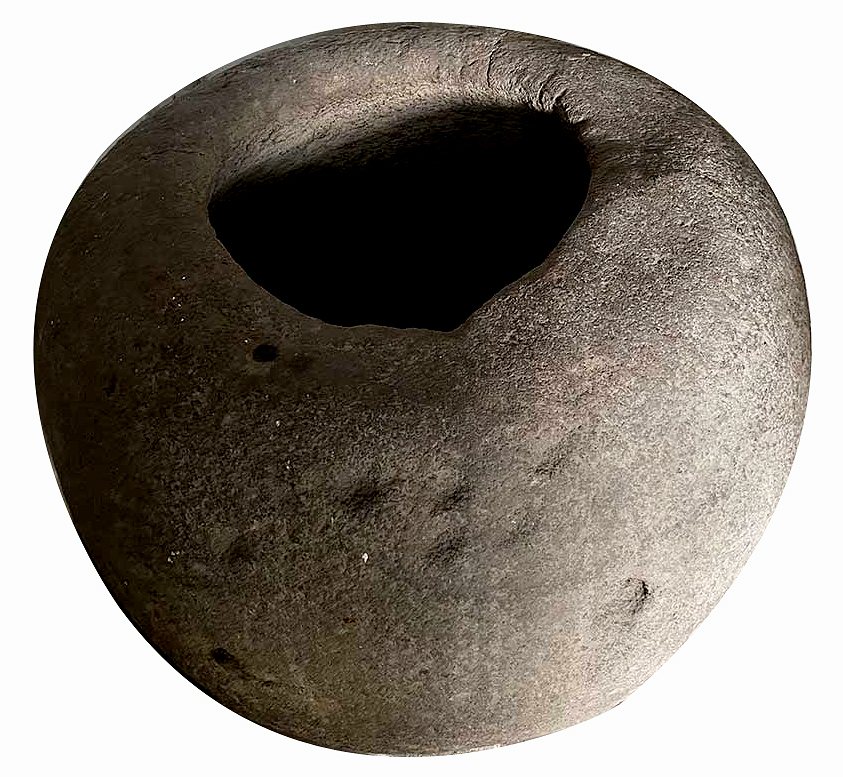
Third is Batu Genthong, an andesite stone with a diameter of about 60cm and a hole in the center to hold water. According to local folklore in Kotagede, this stone served as a water vessel for wudhu (ablution) used by Ki Juru Mertani and Ki Ageng Giring before performing prayers during the Mataram era. The myth suggests that simply by wiping the stone container, water would miraculously appear inside it for purification.